Showing posts with label YA Saves. Show all posts

Tuesday, July 19, 2011

A Little Bit More on Twilight—And How About All That OTHER YA Romance?

Thanks to everyone who read my last post and joined in on the discussion. It’s been great to see the discussion shared around the web, and your comments have been so incredibly insightful and enlightening. You guys are awesome, and you give me all kinds of hope for this crazy world of books and readers.

This week I wanted to share and respond to a comment from a new reader, Reinhardt:
My concern over a larger swath of YA is the emphasis on relationships that can serve to reinforce co-dependence (abusive and otherwise). How many books can you think of that have the main female character pining, needing to be with a guy to feel fulfilled? I think this is a more insidious issue, in that this co-dependence (especially of teenage girls, but not exclusively so) is already normalized, and has been for a very long time. Hey, I'm a dude, and as one of the few who like reading "girl books”… I find the predilection of characters who can only find true personhood inside a romantic relationship as disturbing as Twilight-esque relationships. Really, they are the same, only with different degrees of creepiness.
In short: WHAT HE SAID, GUYS.

This is something I discuss a lot with my friends and colleagues, but not something I’ve posted about on here before. Reinhardt pretty well hit the nail on the head.
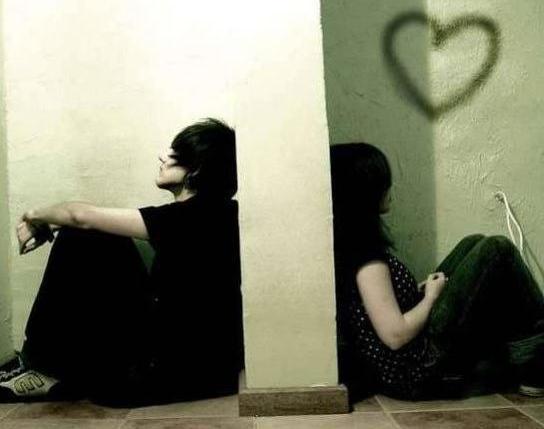
Experiencing love and heartbreak for the first time is an incredibly meaningful part of growing up and finding oneself, and thus it’s no surprise that it finds its way into so many of our books, whether for teens or adults. And I’m not against love stories—my very favorite book, The Great Gatsby, is a love story (though it is also much more than that), and it almost always moves me to tears with its revelations about the human heart. I’m certainly not against stories that have love in them, although when the romance in a story becomes the subject of all conversations about the book, nine times out of ten I’m going to duck out or show my Team Katniss colors. And, like with the Twilight series, I’d be a fool to write off all the teen romances out there, both because so many intelligent, talented, forward-thinking authors stand behind them, and because it provides a booming marketplace that helps keep the industry and the books I love alive and well.

But, by golly, I wish there were as many YA novels out there that featured female protagonists who don’t wind up in a relationship as ones that feature girls who do.

The Young Adult genre is essentially concerned with coming of age. By their very nature, YA novels take a character from childhood to adulthood, from trying different selves on for size to “finding oneself.” And because of that, these novels are usually structured so that the most exciting and important point in the plot, the climax, is also the moment at which the protagonist completes (or makes the novel’s most major step on) her journey from childhood to adulthood, from indecision to agency.

And because of that, I often feel that the climaxes of Young Adult romances, which always seem to be the moment at which the protagonist finally gets with her or his love interest, inadvertently convey the message that we are not whole—that we cannot find ourselves—until we are with another person.

What is more true is that we cannot be with another person (at least, not in a healthy way) until we have found ourselves. That’s why I always find that I enjoy stories about girls having adventures or living their lives more than I enjoy stories about girls getting the guy. Sure, a lot of the former do include romance; think of Malinda Lo’s Huntress, or Suzanne Collins’ Hunger Games trilogy, or, for goodness sake, the Harry Potter series. But in these, like in reality, the developing romance is only one element of the much larger adventure that each character is living is her or his own life. And it is only one element of the story’s climax, or even a part of the falling action—the happy outcome that results from, rather than causes, the protagonist’s growth.

I firmly believe that the culture in which we live—and which we experience, understand, and perpetuate through the media we ingest—has a greater effect than any other factor on how we understand ourselves and the rules of the world around us. So I believe that, as long as such a huge percentage of the books targeted at girls in the YA sections of our bookstores or libraries revolve around the girl-gets-guy scenario, boys and girls alike will continue to internalize the belief that a woman needs a man to become whole and complete.

That’s why the books I want to acquire someday are the ones in which the girl fights the dragon rather than sleeping in the tower. I want to bring as many books as possible into the world that empower women to live independent lives with adventures in which they star. When I find romance woven into those tales, I want it truly to be one thread in a whole tapestry of real, human experience, which is just as meaningful and exciting and full of opportunity for women as it is for men. I want the girls who read the books I edit to be empowered to live whole, fulfilled lives, regardless of their relationship statuses. I want to normalize the diversity of human experience and shed light on the infinite ways in which teen girls—just like teen boys—can find themselves in this world. I want to balance out all the teen romance with all the teen everything-else that makes growth to adulthood so meaningful, so challenging, and so incredibly important.

What about you?

Oh yeah, and I can't resist sharing: Jen Hickman found these totally sweet images that are basically this blog post, but shorter, and illustrated (with R.Patt giving great face):


All praise Tumblr!

Wednesday, July 13, 2011

Waiting for the Right Monster to Come Along: On Twilight, Abusive Relationships, and YA Saves

I had barely finished formulating my beliefs about the YA Saves controversy when I found them being challenged. But the attack didn’t come from the friends with whom I discussed the controversy, the worried parents of teens, or even from the supporters of Meghan Cox Gurdon’s article. No, the challenge to my beliefs greeted me coyly from the top of my to-be-read pile. Because the first book I picked up after the YA Saves controversy began was Twilight.

To say I dragged my feet when it came to exploring the Twilight trend would be a gross understatement, and it probably doesn’t surprise anybody that I’m not one of the world’s biggest fans of the books. Still, I give them a lot of credit; the series made countless people, young and old, into readers. The books turned a lot of already avid adult readers on to the young adult genre, essentially doubling the potential audience for many of the books I work on. They made a profit for their writer and their publishing house, and by spurring an interest in teen paranormal romance they’ve helped a lot of other writers and publishers turn a profit, too, in an industry too often plagued by low or nonexistent profit margins. As a member of this industry, I can’t help but be glad when, whatever the inspiration, people are getting genuinely excited about books. We need that fervor, regardless of what stirs it up. And, despite myself, I found many parts of the first book (mostly the parts devoid of descriptions of marbled abs, beautiful faces, or snowing-because-it's-too-cold-for-rain [wth?] weather) really enjoyable.

But when I think about the vast throngs of teenagers who have read the series and swooned over Edward, it physically pains me. Because no matter how many times Edward saves Bella’s life over the course of the series, that will never change the fact that, on their first date, he tells Bella he may not be able to stop himself from killing her. It doesn’t change the fact that he follows her, threatens her, makes all of her decisions for her, cuts her off from her friends and family emotionally and physically, instills her with the belief that his murderous impulses are her fault (she “has to be good” and not lose control of her urges when they kiss, so as not to tempt him), and attacks her when she says she’s not afraid of him, just to make sure that she learns to be. That’s just in book one, and it sure doesn’t sound like any healthy relationship I know of. In fact, I’m not the first person to point out that Edward’s and Bella’s relationship shows all the signs of an abusive relationship.

And while I may have some doubts about Ms. Gurdon’s claim that dark young adult literature normalizes self-destructive behavior, I do feel that Twilight normalizes—no, glorifies—unhealthy relationships. A glance at the popular website My Life is Twilight, where fans of the series share examples of how their life mirrors their obsession, makes my stomach turn. Here are just a few reasons why:
Am I the only one who gets shivers just reading that? Or, for that matter, whose skin crawled reading some of Edward’s dialogue in the novels?

And I’m far more upset about this glorification of unhealthy love than I am about the darkness Ms. Gurdon spoke of in YA lit. Typically, young adult novels that tackle dark issues like rape, cutting, abuse, and drug use at least communicate the very real and incredibly heartbreaking dangers of those issues. Most offer a glimmer of light and healing in their endings, conveying not only that healing is possible, but also that healing is necessary after encountering these issues—indeed, by implication, that they are unhealthy. In stark contrast, Twilight presents a frighteningly abusive relationship as an ideal.

Out of low self-esteem, a lack of inexperience in love, or manipulation on the parts of their partners, many victims of emotional abuse confuse their partners' abusive behavior for exactly what the books make Edward's actions out to be: signs of intense devotion and passion. That the Twilight series seems to encourage that confusion breaks my heart.

Given the rather frightening statistic regarding teens in abusive relationships and the fact that at least one in three women will experience violence in a relationship during her lifetime—and especially because I've seen the devastating effects of emotional and physical abuse firsthand—I’m extremely uncomfortable with Twilight's idealization of abusive behavior. So if you asked me if I’d like to stop teenage girls from reading Twilight, I’d really, really want to say yes.

But I can’t be both against censoring dark content in young adult literature and for banning a particular series because it exhibits a trend I find scary. I can’t both believe that teenagers are smart enough to make positive decisions and accuse these books of brainwashing teens. I can’t believe that young adults need to be free to own their own destinies and then try to prevent them from learning for themselves what healthy love is. And I can’t deny that, in relationships like in everything else, those who are drawn to darkness are going to find it regardless of how others intervene, and only they can decide to look for a way out.

So while I won’t be recommending Twilight to any of the teens I know, I can’t and won’t argue that the series should be banned. Instead, I hope that those who are as concerned about the dangers of abuse as I am will use the books’ popularity as a jumping-off point for conversations about what healthy relationships look like. I hope many librarians will learn from YALSA’s L. Lee Butler, who uses the book as a tool for anti-domestic and sexual assault education. I hope that parents, friends, and teachers will talk to girls about their own experiences (both good and bad) in relationships so that these girls can begin to decide for themselves what healthy love looks like. I hope that writers will come together to depict more balanced relationships in just as alluring a manor, and that teenage girls will begin to migrate toward stronger female characters and model their relationships off of healthier examples.

It’s reassuring that the first five comments teens made on the My Life is Twilight post that worries me most all urge the person who submitted it to question the healthiness of her relationship and to seek help. Though it’s easy to get caught up in the dream world of fiction, I do have faith in readers to sort out (sometimes through the mistakes they will invariably make) the difference between fiction and reality. And I trust that teenage girls will be smart enough to listen, strong enough to survive whatever path they turn down, and powerful enough to heal themselves and to heal others when it's needed.

I have to have faith in that.

Wednesday, July 6, 2011

On YA Saves and the "Normalization" of Self-Destructive Behavior

On the weekend that Meghan Cox Gurdon published her now-infamous Wall Street Journal article decrying the darkness in Young Adult literature, I took a break from the #YASaves conversations on Twitter to have some fascinating discussions offline, with friends and roommates and publishing industry connections and anyone who would muse with me for a minute. I talked with friends about the article’s implicit assumption that YA as a genre belongs to privileged, protected young adults who can reasonably expect shelter from the horrors in many novels, not the many teens who are underprivileged and devalued by the very color of their skin or the neighborhoods in which they grow up (Sherman Alexie handled this brilliantly in his response to Gurdon's article, “Why the Best Kids Books are Written in Blood”). I talked about the tendency of adults to forget that children are actually capable of handling a great deal of sorrow—that they even seek it out as a natural part of growing up and forming an identity (something I wrote about back in 2009). I talked about how that article related to the book I was reading at the time, and I want to talk about that even more next week.

Mostly, I discussed my feelings about one section of Ms. Gurdon’s article in particular:
The argument in favor of such novels is that they validate the teen experience, giving voice to tortured adolescents who would otherwise be voiceless. If a teen has been abused, the logic follows, reading about another teen in the same straits will be comforting. If a girl cuts her flesh with a razor to relieve surging feelings of self-loathing, she will find succor in reading about another girl who cuts, mops up the blood with towels and eventually learns to manage her emotional turbulence without a knife.

Yet it is also possible—indeed, likely—that books focusing on pathologies help normalize them and, in the case of self-harm, may even spread their plausibility and likelihood to young people who might otherwise never have imagined such extreme measures. Self-destructive adolescent behaviors are observably infectious and have periods of vogue.
Ms. Gurdon's second article in defense of the original, published last week, went on:
For years, federal researchers could not understand why drug- and tobacco-prevention programs seemed to be associated with greater drug and tobacco use. It turned out that children, while grasping the idea that drugs were bad, also absorbed the meta-message that adults expected teens to take drugs. Well-intentioned messages, in other words, can have the unintended consequence of opening the door to expectations and behaviors that might otherwise remain closed.
Oh, how I turned that idea over in my mind! I want to disagree with the sentiment, but I can’t—not with my whole heart.

As a high schooler, I watched one friend of mine after another come to school with gashes on her arms. It happened over the course of a year; by the end of it, nearly half of my regular group was self-harming. I listened to discussions of where scars could most easily be hidden, how to acquire razors or scissors or sharp enough knives, and most of all what it felt like, why it was impossible to resist. My friends and I were dark teenagers, and our taste for dark books and films was insatiable. When I try to remember where we first encountered the concept of cutting, I don’t know which came first: the book I recall all of us reading, or the first person one of us knew who self-harmed.

Would we have encountered cutting outside of literature? Probably. Would it have seemed alluring, written in the scars on an acquaintance’s arms rather than the delicate prose of a book we treasured? I don’t know.

But do I think that the book “normalized” cutting, as Ms. Gurdon suggests? No. What I believe is that my friends, who were hurting immensely for all sorts of reasons, encountered what they thought might be a solution to their pain in those books.

Of course it was no kind of solution worth having. It was horrific. It made everything darker. At the time, if I could have saved my friends from going through that pain or stopped them from hurting themselves, I would have. But I couldn’t. So I waited. I hoped that things would get better, that they would find their way out of the darkness and into someplace lighter.

And you know what? They all did. They’ve become mathematicians and computer scientists and accountants and research assistants and neuroscientists and writers. They’re married or in relationships or single. Some of them make a lot of money, and some don’t. Some of them live with their families, some of them live with friends, and some live on their own. Some of them make art, and some make tools, and most of them somehow make the world a better place for a living. Last time I checked in with them, they were all happy. Isn't that what we all want for teens?

But we had to explore that darkness. If we hadn’t, we would have sat always in the sun, wondering, wondering what temptations the shadows might be hiding from our sight.

My mother called me a few weeks ago to talk about one of my teenage relatives. She was worried, she told me, by his behavior, the people he’s hanging out with, the hobbies he’s taken up. He’s dreadfully close to making a decision, she says, that could destroy his future.

“Let him,” I surprised myself by saying. “He’s smart. He’s going to realize, eventually, what a mistake it was.” I paused. “I mean, I did, didn’t I? And I’m okay.”

I believe that few mistakes are completely irreparable. And I believe that teens are going to make them, no matter what wisdom we impart, what measures we take to shelter them from darkness, and what rules we enforce about what they can and cannot see, think, and do. And I have faith in teenagers. I have immense faith in their intelligence, their capacity for survival, and their ability to heal. That’s what’s missing in these arguments about the darkness of YA lit: the faith in teenagers to navigate those treacherous waters—the faith that teens can and will find their way around to the right path, even if it means backtracking because they’ve gone the wrong way.

What are we so afraid of? That teens will make mistakes? Didn’t we?

And doesn’t every person deserve a chance to own his or her destiny?

They say that the only way out is through, and I believe it. When my friends and I think back on those dark times—and when I think back on the many stupid, painful, destructive decisions I made as a teenager and all the ways in which those decisions could have affected my future—I don’t want to go back and erase any of it. All that darkness became a part of the people we were growing into. It made us strong, it made us powerful, and it made us empathetic. It taught us where we didn’t want our lives to go, and in doing so it taught us what we did want, and who we were. And when our morbid curiosity lost its charm, and the horrific ways we found to patch up our wounds failed us, we started looking for a way out of the darkness. And we all found one, no matter how far in we'd gone or how many mistakes we'd made.

Because darkness lasts only until you seek out a place that’s light.

Edit: Maureen Johnson and Meghan Cox Gurdon herself continued this debate today on WHYY. If you missed the show, catch up here. I was glad to note that one of the callers brought up what I do in this article: that what's missing from the discussion is adults' faith in teenagers' intelligence and ability to make decisions.